News
Site Editor
 Site
/uploads/image/65596ff804643.png
Beyond the compressor room itself, system design plays a critical role in overall efficiency. Poor piping, pressure loss, and overlooked vibration issues can all increase energy consumption and reduce system reliability. Here are some common mistakes—and how to avoid them.
Site
/uploads/image/65596ff804643.png
Beyond the compressor room itself, system design plays a critical role in overall efficiency. Poor piping, pressure loss, and overlooked vibration issues can all increase energy consumption and reduce system reliability. Here are some common mistakes—and how to avoid them.
5 Common Compressed Air System Mistakes That Increase Operational Costs
Views: 1351
Author: Site Editor
Publish Time: 2026-04-29
Origin: Site
Beyond the compressor room itself, system design plays a critical role in overall efficiency. Poor piping, pressure loss, and overlooked vibration issues can all increase energy consumption and reduce system reliability.
Here are some common mistakes—and how to avoid them.
1
. Improper System Sizing
An incorrectly sized compressor system—either oversized or undersized—can significantly reduce efficiency and stability.
An oversized system often operates under partial load or frequent unload conditions, leading to unnecessary energy waste. On the other hand, an undersized system may struggle to meet demand, causing pressure fluctuations and increased wear from continuous high-load operation.
To avoid this, it is important to evaluate actual air demand, including peak and average consumption, and select a system with appropriate capacity and control strategy. Solutions such as variable speed drive (VSD) can help match output to real-time demand, improving efficiency and system stability.
2
. Poor Piping Design
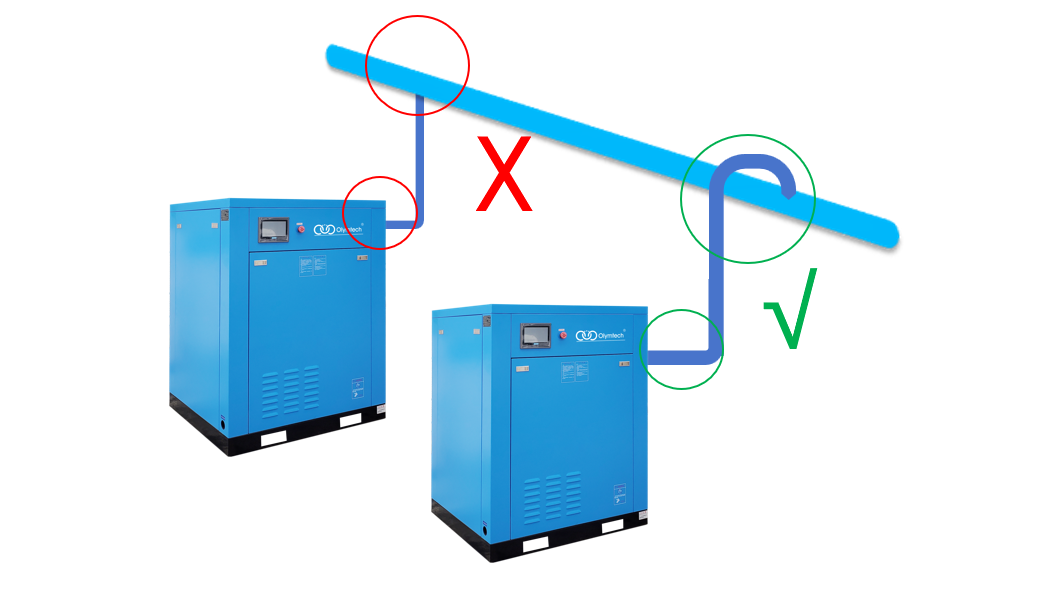
Improper piping layout—such as excessive bends, long distances,
or
incorrect slope—can cause pressure instability and
condensate buildup. To improve performance, minimize unnecessary bends, use properly sized pipes, and ensure proper drainage. The main pipeline should be larger than the compressor outlet , and branch connections should avoid direct T-joints to maintain smooth airflow.
3
. Ignoring Pressure Drop
Pressure drop is a hidden cost in many compressed air systems. Undersized pipes, clogged filters, or inefficient layouts force compressors to work harder, increasing energy consumption.
Optimizing pipe diameter and regularly maintaining filters and separators can significantly reduce system resistance and operating costs
4. Overlooking Noise and Vibration
Noise and vibration are often underestimated but can impact both equipment lifespan and workplace conditions. Continuous vibration may lead to mechanical stress and structural issues over time.
Using vibration pads, flexible connections, and proper installation methods can reduce these risks.
5. Lack of Regular Inspection
Even a well-designed system requires ongoing monitoring. Ignoring key parameters such as pressure, temperature, and differential pressure can lead to unnoticed inefficiencies or failures.
Routine inspection and preventive maintenance are essential for long-term stability.
An optimized compressed air system is not just about equipment—it is about
how the entire system works together
. By avoiding these common mistakes, manufacturers can improve efficiency, reduce energy costs, and extend equipment lifespan.
With proven technology and integrated solutions,
Olymtech supports customers in building efficient and reliable compressed air systems worldwide
.




 EN
EN