News
Site Editor
 Site
/uploads/image/65596ff804643.png
An air compressor often operates for long hours, making routine maintenance essential for reliable performance and energy efficiency. Dust accumulation, restricted air filters and inadequate cooling can affect operating conditions and contribute to unnecessary energy consumption. Regular inspections help identify potential issues early, reduce avoidable downtime and keep your compressed air system operating as intended.
Regular Air Compressor Maintenance: Small Checks That Help Control Energy Costs
Views: 17
Author: Site Editor
Publish Time: 2026-11-27
Origin: Site
An air compressor often operates for long hours, making routine maintenance essential for reliable performance and energy efficiency. Dust accumulation, restricted air filters and inadequate cooling can affect operating conditions and contribute to unnecessary energy consumption.
Regular inspections help identify potential issues early, reduce avoidable downtime and keep your compressed air system operating as intended.
Three Key Areas to Check Every Week
A consistent weekly inspection routine helps operators monitor the condition of their air compressors and identify potential issues early. Before opening any panels or carrying out maintenance, always stop the machine, lock out the power supply and isolate the air supply. Release all stored pressure, verify that the system is fully depressurised, and allow hot components to cool.
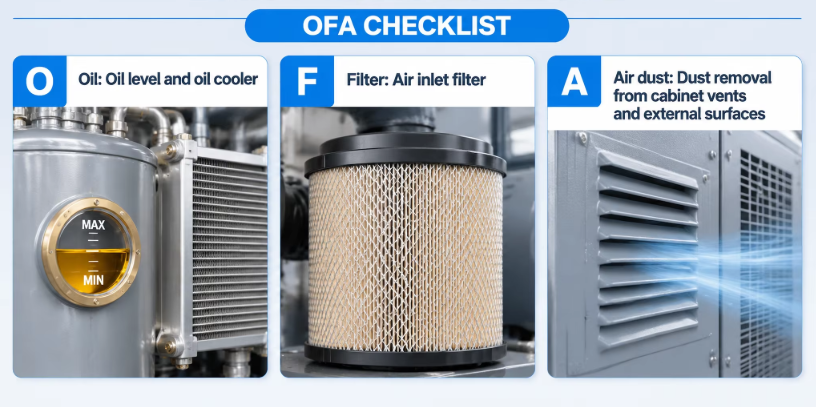
To make these routine checks easier to remember, we've grouped three key maintenance areas into a simple
OFA checklist
-
O – Oil:
Oil level and oil cooler
-
F – Filter:
Air inlet filter
-
A – Air
dust:
Dust removal from cabinet vents and external surfaces
1. Oil Level and Oil Cooler
After shutting down the compressor, wait at least 30 minutes to allow oil to drain back into the separator tank. Check the oil level against the marked range on the tank's oil level gauge.
At the same time, inspect the oil cooler fins for dust and debris. Check them weekly and clean them at least every two weeks under normal site conditions, or more frequently in dusty environments.
Keeping the cooler clean supports effective heat dissipation and helps maintain stable operating temperatures.
2. Air Inlet Filter
Inspect the air inlet filter every week for dust accumulation or restriction. A clogged filter can restrict airflow and affect compressor performance.
Clean the filter element only if it is specifically designed for cleaning. Replace damaged elements or filters that remain restricted after approved cleaning. Always follow the manufacturer's maintenance instructions.
3. Internal and External Dust Removal
Dust can accumulate around cabinet vents and on external surfaces, particularly in workshops with high airborne dust levels.
Use a guarded, low-pressure air duster and appropriate eye protection when removing dust. Keep the air jet directed away from people and electrical controls, and follow the compressor manufacturer's cleaning instructions.
Why Routine Maintenance Matters
The financial impact of reduced efficiency can be significant over time. For example, if a facility spends $70,000 annually on electricity, a 2% increase in energy costs represents an additional $1,400 per year.
Routine maintenance helps identify conditions that may contribute to energy waste, including restricted filters, dust-covered coolers and poor heat dissipation. While these checks do not guarantee a specific level of energy savings, they form an important part of an effective compressed air system maintenance plan.
Keep Your Compressed Air System Running Efficiently with Olymtech
Weekly inspections are an important first step, while periodic professional servicing helps assess the wider condition and performance of your compressed air system.
Olymtech's
11 Energy Efficiency Factors – Quarterly Maintenance Service
is designed to support regular equipment inspections and maintenance, helping businesses identify potential efficiency issues and keep their compressors in good operating condition.
Contact Olymtech to learn more about our quarterly maintenance service and how regular servicing can support your compressed air system.




 EN
