Olymtech Technology Development Co., Ltd

How Heat and Dust Affect Compressor Reliability

Views: 6 Author: Site Editor Publish Time: Origin: Site
 
Industrial air compressors are often expected to operate continuously in demanding environments. High ambient temperatures, airborne dust, and long running hours are common challenges across manufacturing facilities, construction sites, and processing plants.
While compressor specifications such as pressure and airflow often receive the most attention, environmental conditions can have an equally significant impact on long-term reliability and performance. Understanding how heat and dust affect a compressed air system is essential for maintaining stable production and reducing unexpected downtime.


The Impact of High Temperatures on Compressor Performance

Heat is one of the most common causes of compressor-related issues, particularly during summer months or in facilities with limited ventilation.
When operating temperatures rise, critical components such as the motor, inverter, lubricating oil, and air-end are placed under greater stress. Excessive heat can lead to:
  • Reduced operating efficiency
  • Faster lubricant degradation
  • Increased component wear
  • Higher risk of unexpected shutdowns
  • Shortened equipment lifespan
For variable speed compressors, maintaining a stable operating temperature is especially important, as the inverter's performance can be directly affected by inadequate cooling.


Why Dust Is More Than Just a Maintenance Issue

Dust accumulation is often underestimated until it begins to affect system performance.
In industrial environments, airborne particles can gradually clog cooling surfaces, restrict airflow, and reduce heat dissipation efficiency. Over time, this may result in:
  • Higher operating temperatures
  • Reduced cooling performance
  • Increased energy consumption
  • More frequent maintenance requirements
  • Greater risk of component failure
Without effective airflow management, even a high-performance compressor can experience reliability issues in dusty environments.


Cooling System Design Matters

Many users focus on compressor power ratings, air delivery, or motor efficiency when selecting equipment. However, cooling system design plays a critical role in ensuring reliable long-term operation.
An effective cooling design should not only remove heat efficiently but also maintain clean airflow through the machine, especially in environments where dust and temperature fluctuations are unavoidable.
Features such as optimized airflow paths, dedicated cooling channels, and intelligent temperature management can significantly improve equipment stability and service life.
 

Designed for Demanding Conditions

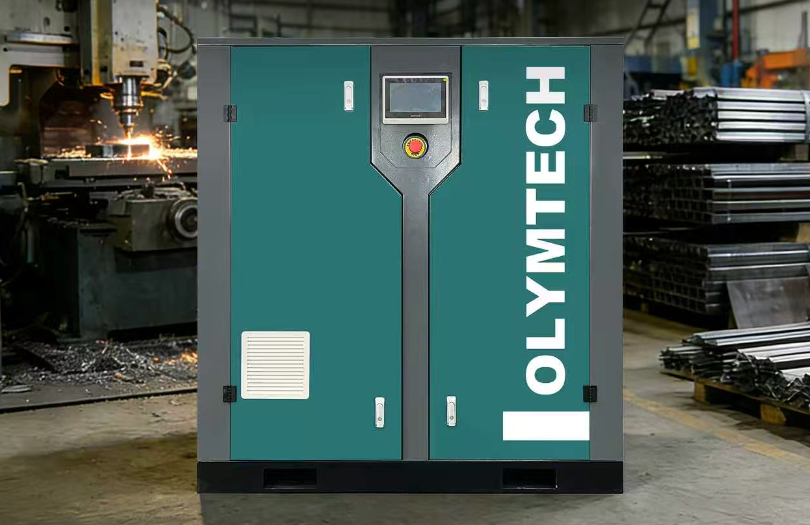
The Olymtech S Series Permanent Magnet Variable Speed Screw Air Compressor is engineered with reliability in mind.
Its vertical cooling system promotes efficient heat dissipation, while the integrated airflow duct helps improve ventilation around key components such as the inverter. A front-mounted dust-proof window helps reduce the impact of airborne particles while maintaining smooth airflow throughout the machine.
In addition, the thermostatic valve continuously monitors oil temperature, directing oil through the cooler when necessary and helping maintain optimal operating conditions.
Together, these design features contribute to stable performance, improved cooling efficiency, and reliable operation in demanding industrial environments.


Conclusion

Reliable compressed air depends on more than airflow capacity and motor efficiency. Heat and dust can significantly affect compressor performance, energy consumption, and equipment lifespan if not properly managed.
By prioritizing cooling efficiency and airflow management, manufacturers can reduce operational risks, improve system reliability, and support uninterrupted production throughout the year.
Looking for a compressor designed for challenging industrial environments? Contact Olymtech to learn more about the S Series Permanent Magnet Variable Speed Screw Air Compressor.
×

Inquire

*Name
*Email
Company Name
Tel
*Message

By continuing to use the site you agree to our privacy policy Terms and Conditions.

I agree