News
Site Editor
 Site
/uploads/image/65596ff804643.png
Electric motors are at the heart of industrial air compressors. They convert electrical energy into the mechanical power needed to drive the compressor air-end, making motor efficiency an important factor in the energy consumption of a compressed air system. But what does motor efficiency actually mean, and how does it affect your production operations?
Why Motor Efficiency Matters in Air Compressors: From Energy Conversion to Operating Costs
Views: 9
Author: Site Editor
Publish Time: 2026-11-09
Origin: Site
Electric motors are at the heart of industrial air compressors. They convert electrical energy into the mechanical power needed to drive the compressor air-end, making motor efficiency an important factor in the energy consumption of a compressed air system.
But what does motor efficiency actually mean, and how does it affect your production operations?
What Does Motor Efficiency Really Measure?
Motor efficiency refers to how effectively an electric motor converts electrical input power into useful mechanical output power. It is expressed as a percentage:
Motor Efficiency = Mechanical Output Power ÷ Electrical Input Power × 100%
For example, a motor with an efficiency of 95% converts 95% of its electrical input into mechanical output, while the remaining energy is lost, primarily as heat through electrical, magnetic and mechanical losses.
A higher-efficiency motor reduces these losses. This means it can deliver the same mechanical output power while drawing less electricity from the grid.
For an industrial air compressor operating for extended periods, even a relatively small improvement in motor efficiency can contribute to lower electricity consumption over time.
What Does Higher Motor Efficiency Mean for Your Operations?
For manufacturers, compressed air is often a continuous utility supporting multiple production processes. Electricity consumption therefore has a direct impact on operating costs.
A high-efficiency motor can bring several practical advantages:
-
Lower electricity consumption:
Less electrical input is required to deliver the same mechanical output power.
-
Reduced energy losses:
Less energy is dissipated within the motor as heat.
-
Better long-term operating economics:
Energy savings can accumulate over the equipment's service life, particularly in applications with long operating hours.
While motor efficiency is only one part of overall compressor performance, it plays an important role in reducing energy losses and supporting more energy-efficient operation — particularly in industrial environments where compressors run for long hours. Actual savings depend on motor loading, operating hours, electricity prices and the efficiency of the complete compressor system. Motor efficiency should therefore be considered alongside air-end performance, pressure requirements, control strategy and system configuration.
Going Beyond IE5 with Olymtech S and 2S Series
At Olymtech, motor efficiency is a key consideration in the design of our compressed air solutions.
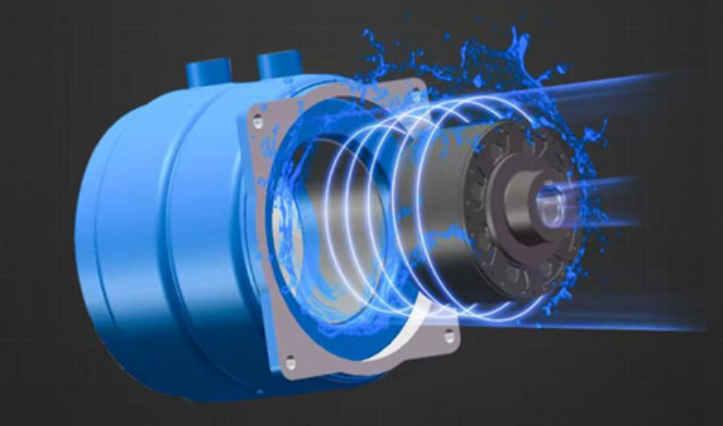
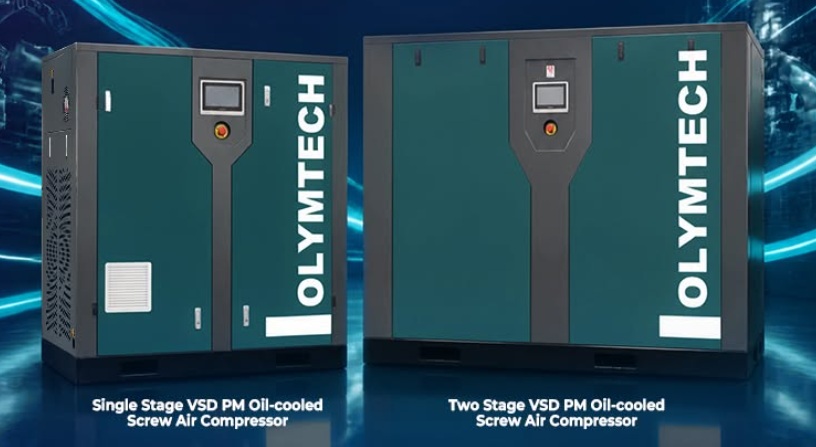
Both the S Series PM VSD Screw Air Compressors and 2S Series Two-Stage Compressors are equipped with high-efficiency, oil-cooled permanent magnet motors. Their motor efficiency exceeds the IE5 benchmark — a performance level we informally refer to as IE5+.*
Combined with their respective compressor technologies, these motors help reduce energy losses while supporting the air supply requirements of demanding industrial applications.
Both series are also engineered for challenging operating environments, including high temperatures, heavy dust and heavy-duty industrial conditions.
Looking to improve the energy efficiency of your compressed air system? Contact Olymtech to learn more about our S and 2S Series compressors and find a configuration suited to your production requirements.
 Note: IE5+ is not an officially defined efficiency class under IEC standards. It is an informal industry term used to describe motor efficiency exceeding the IE5 benchmark. IEC TS 60034-30-2 defines efficiency classes for variable-speed AC motors, with IE5 as its highest specified class.




 EN